
Starting a business in Swadlincote takes guts. You’ve spotted a gap in the market (and a market in the gap). You’ve done your homework. The numbers stack up.
Your friends and family believe in your idea.
Now comes the crucial bit – choosing how to structure your business legally. This decision will shape your entire business journey. It affects how much tax you’ll pay, what paperwork you need to handle and, crucially, what happens to your personal finances if things go wrong.
Get it right, and you’ll build your new business on solid foundations. Get it wrong, and you could face unnecessary headaches, higher tax bills or worse.
Many new business founders rush this decision or copy what others have done. But your business deserves a structure that matches your specific goals and circumstances.
This blog walks through your options and helps you find the right fit for your venture.
What to consider before choosing your business structure
The structure of your Swadlincote business will affect every aspect of how you operate. So, it’s worth taking time to get it right. Your liability is the first thing to consider – how much of your own money are you prepared to put at risk? Some business structures offer better protection for your personal assets than others, which could make all the difference if things don’t go to plan.
Tax implications vary significantly between different structures. Your choice will affect how much money you keep after tax, so it’s worth understanding these differences from the start. Think about your growth plans, too. If you’re planning to bring in investors or sell the business in the future, some structures will make this much easier than others.
The administrative burden varies widely between different structures. Some require minimal paperwork, while others need regular filing of accounts and returns. Make sure you can handle these responsibilities or budget for professional help (that’s what Buckler Spencer is here for).
Setup costs also differ – while some structures cost nothing to establish, others need registration fees and legal support. Factor these costs into your planning.
Understanding your options
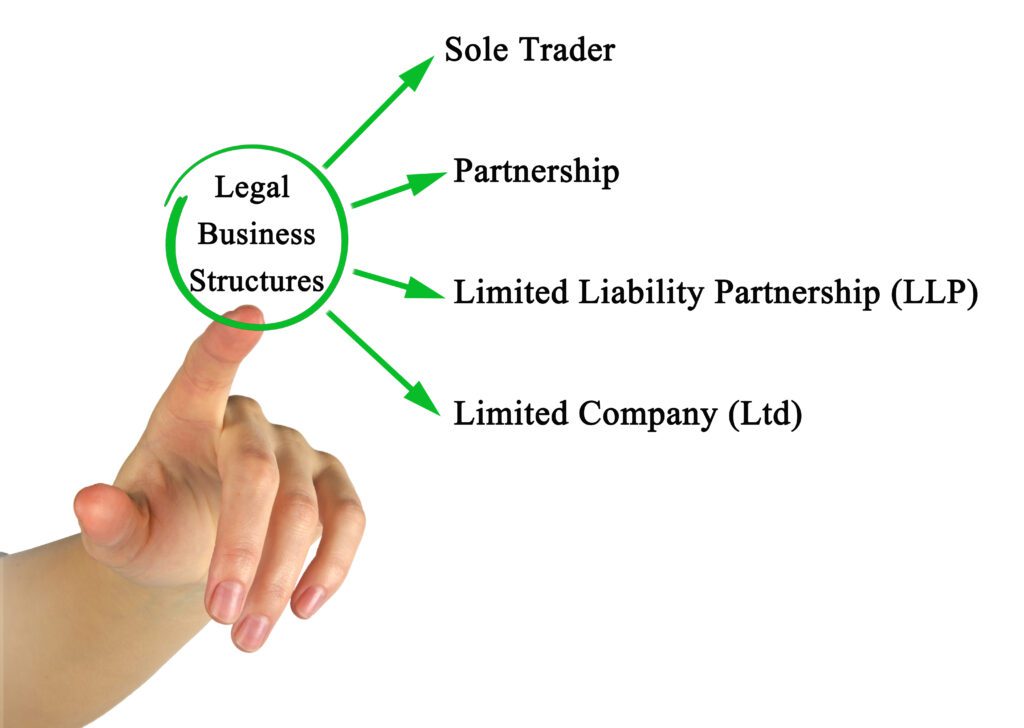
Choosing a business structure doesn’t have to be complicated. Each option has its strengths and trade-offs. Some suit solo entrepreneurs, while others work better for teams. Some keep things simple, while others offer more protection.
Here, we explore each one to help you find the best match for your business.
Sole trader: Keep it simple
Being a sole trader means you are the business. It’s the simplest way to start trading, with minimal paperwork and complete control over your business decisions. You keep all profits after tax, and you can still hire staff if you need to.
However, there’s a significant catch – you’re personally responsible for any business debts. If things go wrong, your personal assets could be at risk. Tax works through self-assessment, meaning you’ll pay income tax and National Insurance on your profits. You must register with HMRC as soon as you start trading. This structure works particularly well for freelancers, consultants and small service businesses.
Partnerships: Strength in numbers
Partnerships suit business ventures where two or more people want to work together.
Think of it as a team of sole traders working under one roof. You share the workload, the decisions and the rewards, making it ideal for businesses that benefit from combined skills and resources.
Each partner pays tax on their share of the profits through self-assessment. While the partnership must register with HMRC, each partner needs to file their own tax return. A written partnership agreement is essential – it sets out how you’ll split profits, who handles which responsibilities, what happens if someone wants to leave, and how to resolve any disputes that might arise.
This structure particularly suits professional services firms and family businesses. The shared responsibility can make running the business more manageable, but remember that you’ll share the risks, too.
Limited liability partnerships (LLPs)
LLPs offer an interesting middle ground, blending partnership flexibility with limited company protection. You’ll need at least two ‘designated members’ who handle the paperwork and legal responsibilities. The significant advantage is that your personal assets stay protected – your liability stops at whatever you’ve invested in the business.
All LLPs must register with Companies House and file annual accounts. You’ll need to start trading within a year of registration, and a formal members’ agreement is essential. This structure works particularly well for professional service firms and consulting practices, especially those handling high-value contracts.
Limited companies: Creating a separate entity
A limited company exists as its own legal entity, separate from its owners. This separation offers excellent protection for your personal assets. You’ll need at least one director and one shareholder, a registered office address, and articles of association that set out how the company will be run.
The company pays Corporation Tax on its profits, and you can take money out as salary or dividends. While your accounts will become public record, this structure offers significant advantages for growth and investment. It often presents a more professional image and makes it easier to raise funds or sell the business in the future.
Making your decision
When choosing your structure, consider your risk tolerance, potential tax rates, and administrative capabilities. Think about whether you’ll need to raise money and if you might want to sell the business later.
Many people make the mistake of choosing a complex structure too soon or forgetting about compliance costs. Always get agreements in writing, and don’t just copy what others have done – your business is unique.
Professional advice becomes particularly valuable when you’re unsure about tax implications, need complex agreements, or are planning significant growth. Remember, you can change your structure later – many successful businesses start simple and evolve as they grow.
Next steps
Once you’ve chosen your structure, you’ll need to register with the relevant authorities. Sole traders and partnerships register with HMRC, while LLPs and limited companies need Companies House registration. You might also need VAT registration, depending on your turnover.
Essential paperwork includes a business bank account, appropriate insurance policies and any agreements between owners. While sole trader registration can happen the same day, partnerships might take 2-3 days to set up. LLPs and limited companies usually take about 24 hours to register, but bank accounts typically need 1-2 weeks.
How can we support you?
At Buckler Spencer, we understand that choosing a business structure can feel overwhelming. Our team has helped hundreds of local businesses in and around Swadlincote get started on the right foot. We can review your business plan, calculate tax implications, handle registration paperwork and set up your accounting systems. We’ll guide you through compliance requirements and make sure you’re ready to start trading with confidence.
The right structure gives your business a solid foundation for growth. Want to talk through your options? Let’s have a chat about your business plans and find the structure that fits best.